

At AI Salon Rome, the conversation was not about AI in the abstract, It was about what it actually takes to build systems that companies can use in production, without losing control over data, cost, or reliability. Regolo joined that discussion by sharing its path from an early-stage project to a platform processing billions of tokens a day, built around sovereign infrastructure, compliance, and low-impact operations.
There are moments when an event does more than gather people in a room, It gives shape to a shift that is already underway. AI Salon Rome felt like one of those moments, because the conversation was not driven by hype, spectacle, or vague promises about the future.
That context matters, because the AI market is moving fast, but not always in the right direction; much of the global conversation is still dominated by scale, funding, and model size, while developers and companies are increasingly focused on something more practical: how to build AI applications that are secure, efficient, and sustainable over time.
The Ideas, Tools, and Infrastructure Shaping European AI
Before diving into the article, here is a short video recap of the key moments from AI Salon Rome. It brings together some of the most relevant insights from the event, from AI agents and developer workflows to semantic routing, model selection, and the broader role of sovereign infrastructure in Europe.
A market growing up
If the past two years have been defined by acceleration, they have also been defined by confusion. The global AI race has pushed companies to spend aggressively, reorganize teams, and chase scale at all costs. Yet beneath that surface, a more mature conversation is emerging, one that asks not only what AI can do, but under which conditions it becomes reliable, governable, and economically sustainable.
Beneath every intervention was the same underlying question: how do we build AI systems that are not only powerful, but usable inside real organizations, under real constraints, with real accountability?
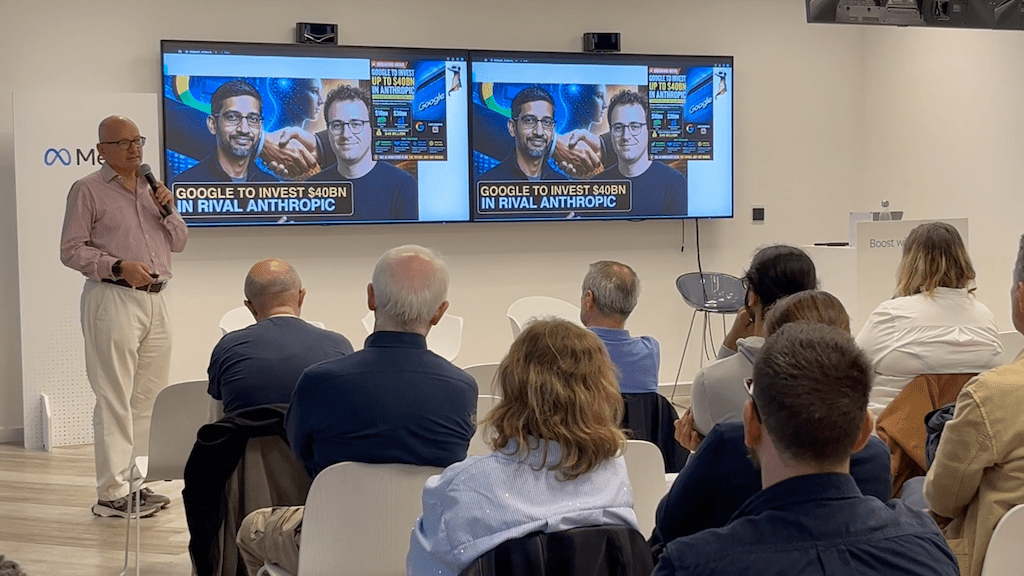
Roberto Magnifico speech
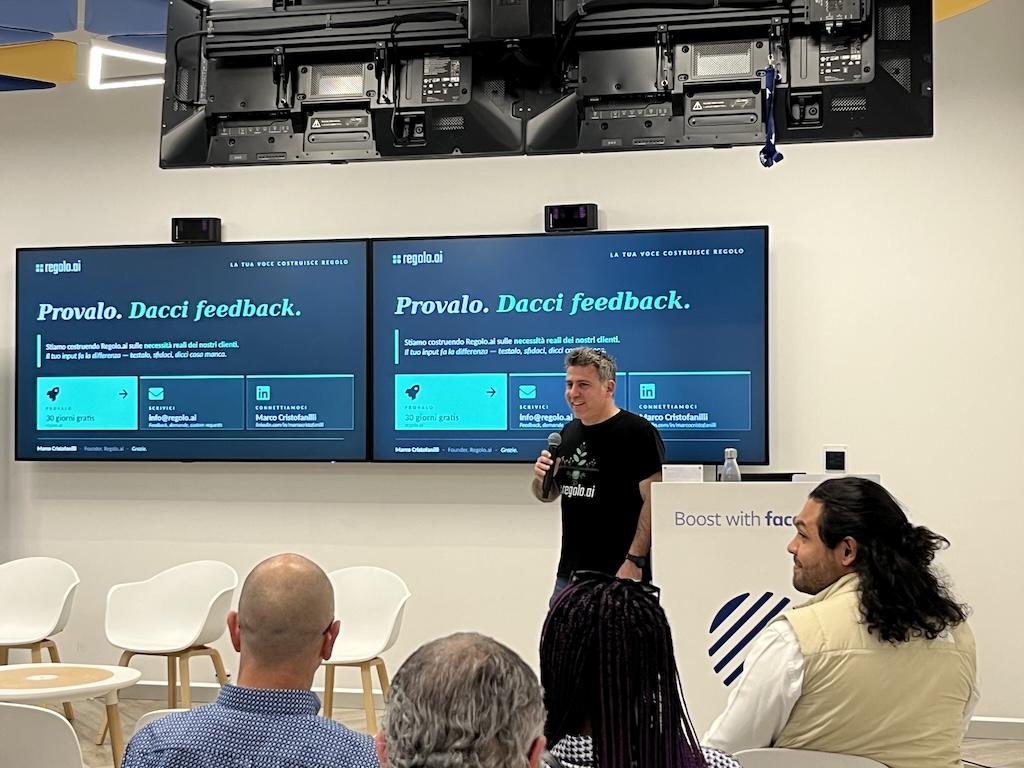
Marco Cristofanilli: from infrastructure to scale
Marco Cristofanilli’s talk gave that question a concrete frame. His story was not just about growth, or about volume, or about what it means to go from zero to billions of tokens a day. It was about what has to exist underneath that scale for it to matter: infrastructure that is sovereign, compliant by design, and built to support serious workloads without treating privacy as an afterthought.
In that sense, the talk was not simply a company milestone presentation. It was a reminder that inference is becoming strategic infrastructure. If Europe wants a credible role in AI, it will need platforms that developers and enterprises can adopt without accepting opaque trade-offs around data residency, retention, or control.
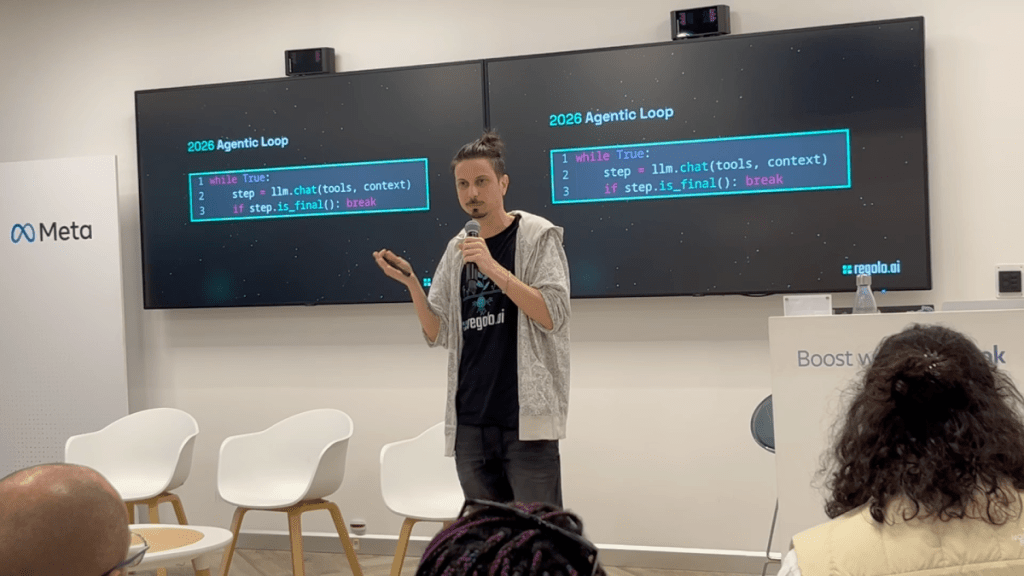
Eugenio Petullà: agents in the real world
Eugenio Petullà’s intervention moved the discussion into one of the most contested areas in AI today: agents. For a while, the field seemed fascinated by elaborate orchestration layers, retrieval pipelines, vector databases, and multi-step reasoning systems that often looked impressive, but were difficult to maintain. What emerged from his perspective was a more grounded view, one in which the future of agents may depend less on architectural excess and more on clarity.
That is an important shift. As context windows expand and models become better at handling sequential tasks, the most useful agent systems may turn out to be the ones that do fewer things more coherently. Simpler loops, better tool use, and tighter control can often outperform complexity for its own sake. And once agents begin touching internal workflows, that simplicity becomes more than elegance, it becomes a requirement for trust.
Daniele Scasciafratte: coding with flow, not friction
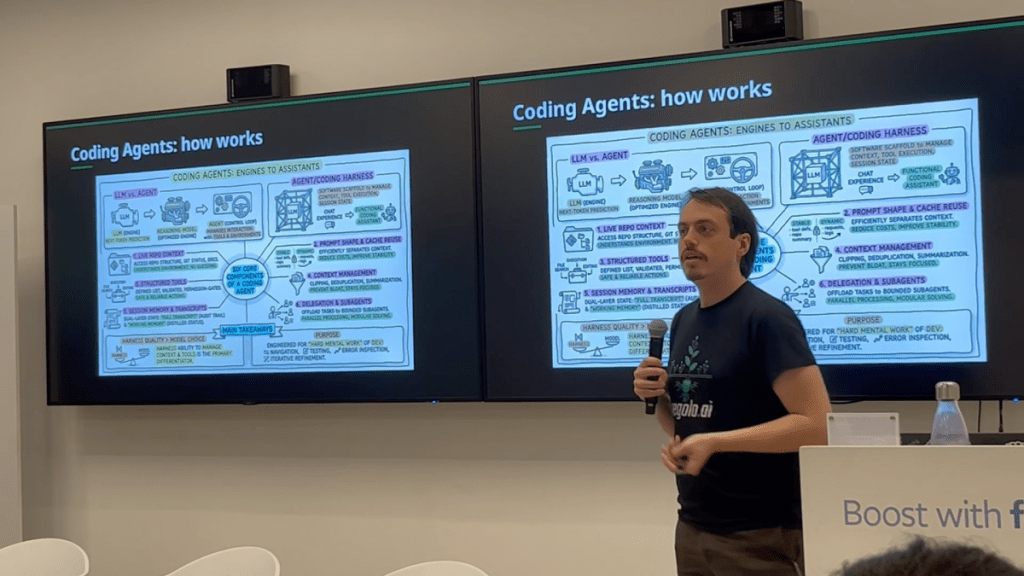
Daniele Scasciafratte’s talk brought the conversation closer to the day-to-day experience of developers. “Vibe coding” can sound playful at first, but beneath the term is a serious idea: coding is changing, not because developers matter less, but because the interface between intention and execution is becoming faster, more fluid, and increasingly collaborative.
Still, that speed comes with a condition. The more natural it becomes to generate, modify, and test code through AI, the more important it is to define what good output actually means. This is where the emerging logic of spec-driven development starts to matter. If AI reduces friction in the act of building, then developers need stronger ways to express goals, boundaries, and validation criteria. Otherwise, flow becomes noise, and productivity turns into rework.
Andrea Nardoni: the hidden discipline of model deployment
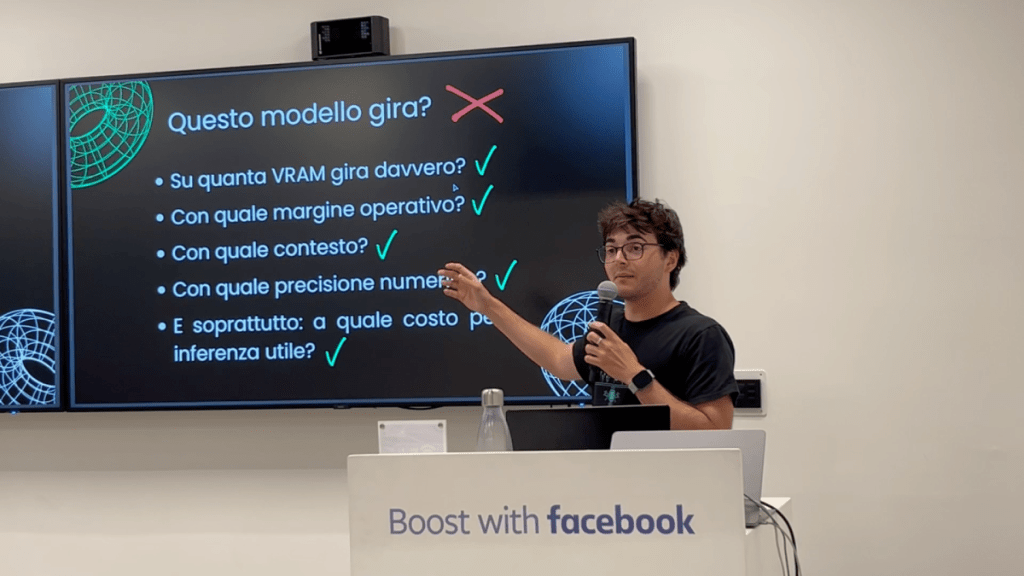
Andrea Nardoni’s contribution addressed a part of AI that often receives less attention than it deserves: the discipline of deployment. Choosing a model is one thing; understanding what hardware it needs, how it performs, and whether the economics make sense is something else entirely. That gap between excitement and execution is where many AI projects quietly become inefficient.
The value of a deterministic approach to GPU selection is precisely that it removes guesswork from a critical layer of the stack. Instead of treating infrastructure as a black box, it invites teams to think clearly about fit, cost, and performance. In a market where people often default to more power than they need, that kind of discipline is not conservative, it is enabling.
Francesco Massa: routing intelligence, not just requests
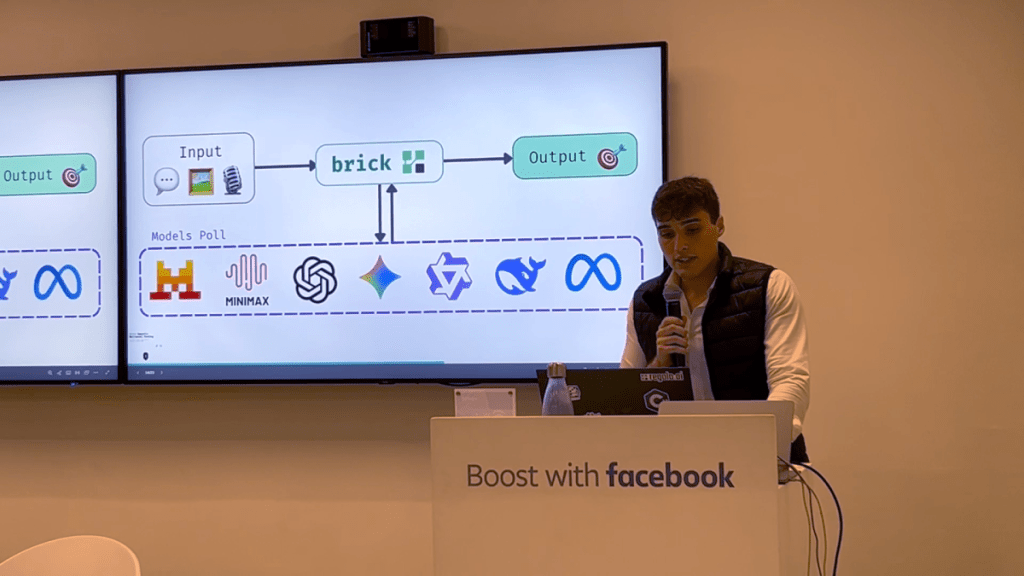
Francesco Massa’s talk extended that same logic into orchestration. One of the least productive habits in AI today is the tendency to send every task to the largest available model, as if intelligence were simply a matter of scale. Semantic routing challenges that instinct by asking a better question: what is the right model for this request, in this context, at this cost?
That is where tools like Brick point to something bigger than optimization. They suggest that the future of AI systems may depend as much on coordination as on raw model capability. Routing well means reducing waste, improving latency, and matching complexity to actual need. In practice, that is not only a technical improvement, it is a philosophical one. It shifts the conversation from abundance to intention.
What the evening revealed
Taken together, the five interventions painted a coherent picture of where AI is going – the next phase will not be defined only by larger models or louder announcements. It will be defined by systems that are easier to trust, easier to operate, and easier to integrate into environments where governance, privacy, and efficiency are not optional extras, but first-order requirements.
It brought into the same room the pieces that too often get discussed separately: agents, coding workflows, model routing, deployment strategy, compliance, sovereignty, and infrastructure. Seen together, they describe the outline of a more mature AI stack, one that feels especially relevant in Europe, where control and openness are increasingly part of the same conversation.
What the Industry Still Has to Solve
For European companies, this is no longer a theoretical debate, once AI enters business processes, internal documentation, product logic, and operational flows, the old distinctions between model choice, infrastructure choice, and governance choice start to disappear: they become the same decision, viewed from different angles.
Regolo infrastracture is designed to support this market demand and that is why the discussion resonated. We’re the practical solution to the European companies, accessible through OpenAI Compatible APIs, privacy by design, and strong enough to support real workloads with open models and clear rules.
The last but not the least, we’re 100% green energy powered!
free 30-day trial at regolo.ai and deploy LLMs with complete privacy by design.
👉 Talk with our Engineers or Start your 30 days free →
- Discord – Share your thoughts
- GitHub Repo – Code of blog articles ready to start
- Follow Us on X @regolo_ai
- Open discussion on our Subreddit Community
Built with ❤️ by the Regolo team. Questions? regolo.ai/contact or chat with us on Discord