Hermes Agent Security: Hardening Guide & Regolo Zero Data Retention
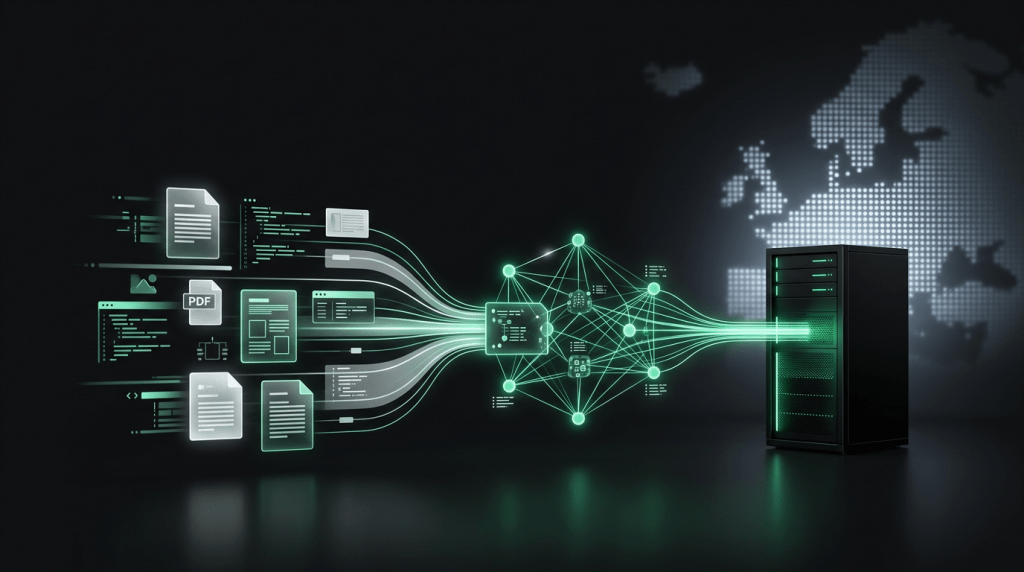
Hermes Agent launched in early 2026 as an open-source autonomous runtime built by Nous Research; by May 2026, tracking placed it at the top…
Practical guides for running models on your own infrastructure: from local experiments to clustered deployments, monitoring, and automation without vendor lock‑in.
Hermes Agent launched in early 2026 as an open-source autonomous runtime built by Nous Research; by May 2026, tracking placed it at the top…
This tutorial shows how to build an analytics AI agent that retrieves KPI definitions with Qdrant, queries structured metrics through governed tools, and prepares…
Most LangChain tutorials default to OpenAI. This one doesn't — and it is written for a specific reader: EU-based engineering teams in regulated industries…
TencentDB Agent Memory isn't the only memory system out there: Mem0 and OpenViking both have their strengths, but if you're building on Hermes or…
Announced on July 14, 2026, the model supports a 262K token context window while delivering impressive local inference performance: 163 tokens/second on an NVIDIA…
If you are comparing LLM architectures for business, the smart move is not to chase the model with the flashiest benchmark, the real job…
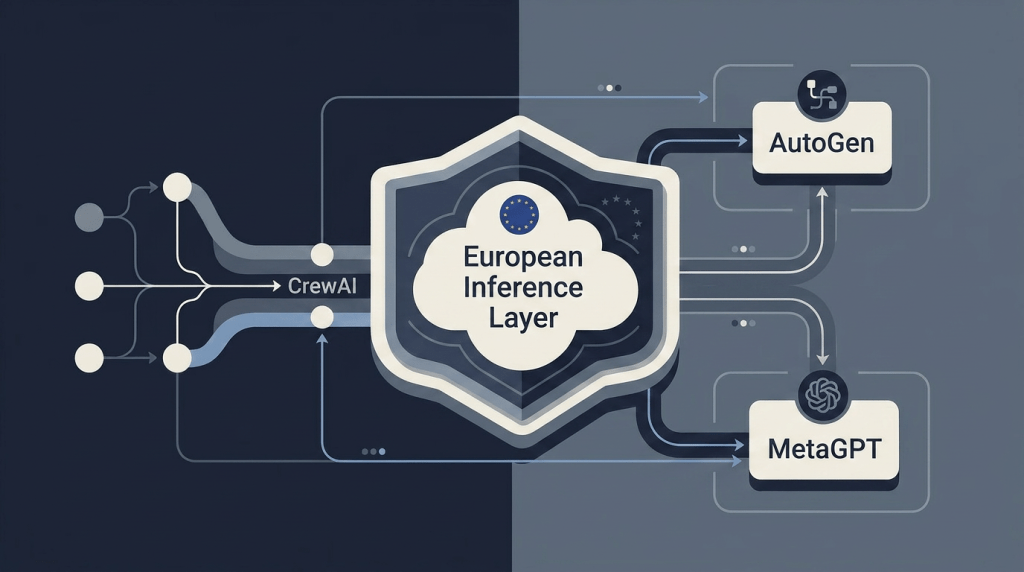
Many teams eagerly wire up a multi-agent framework to automate their workflows and point it at a default US-based API, only to later realize…
Building Retrieval-Augmented Generation (RAG) applications on sensitive documents requires strict control over where data flows. By combining a private vector database for embeddings with…
If your agency wants to offer agentic services in healthcare without building from scratch, n8n is the fastest path: a visual orchestrator with a…
If you ship LLMs and agents into real workflows, you’ve already seen it: the model sounds confident, but dates are wrong, references are made…
Replacing OpenAI with a European, GDPR-compliant inference provider does not require rewriting your application because we provide an OpenAI-compatible endpoint, you only need to…
DFlash is a new block-diffusion based speculative decoding technique that speeds up large language model (LLM) inference by predicting multiple tokens in parallel. Unlike…