

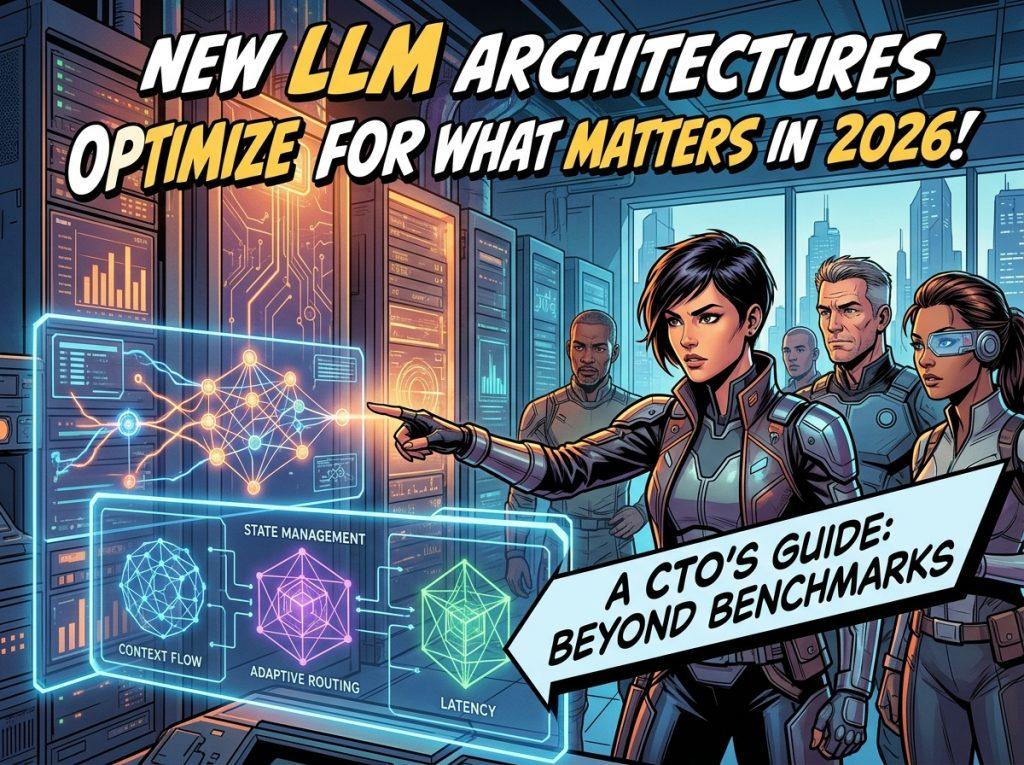
The important shift in 2026 is architectural, not cosmetic. Llama 4 is positioned around native multimodality, Claude 4 around coding and agent workflows, and Gemini 2.5 around “thinking,” which means teams now need workload-aware routing instead of a single default model for every task.
You are no longer buying “the best model”; you are designing an inference portfolio with different latency, reasoning, and modality profiles. For ML developers, the practical prerequisite is a thin gateway layer that can discover available Regolo models dynamically, classify the request, and route it to the right model without hardcoding vendor-specific assumptions. Regolo’s catalog is exposed through /models, which makes that gateway pattern straightforward to implement.
Key concepts
The first concept is workload fit. A short classification task, a policy-heavy analysis, and a long-form technical explanation should not automatically hit the same model, even if one model could do all three. When Google positions Gemini 2.5 as a “thinking” model and Anthropic positions Claude 4 around long-running coding and agent tasks, that is a signal that inference budget is now part of product design.
The second concept is capability isolation. Use a fast general chat model for ordinary interaction, then escalate to a reasoning-capable model only for ambiguity, exceptions, or high-impact decisions. Regolo’s API shape supports this cleanly because you can discover models first and then call the same chat-completions endpoint with the selected model.
The third concept is observability. If your gateway does not log the selected model, task type, latency class, and escalation reason, you will never know whether architecture is improving outcomes or simply adding complexity.
Procedure and runnable code
A good use case for this article is an enterprise insurance operations copilot. Most requests are cheap and repetitive, such as summarizing a claim note or drafting a broker email. A smaller share requires slower, deeper analysis, such as explaining why a claim falls into a policy exception or reconciling conflicting clauses.
The script below is runnable as-is after you set REGOLO_API_KEY. It discovers models from Regolo, applies simple routing heuristics, and sends the request to /v1/chat/completions. It uses only requests and the Python standard library, so it stays portable and easy to deploy. Regolo’s docs explicitly show both /models and /v1/chat/completions, and also document thinking: true for supported models.
# architecture_router.py
import os
import json
import requests
from typing import Any, Dict, List, Union

API_KEY = os.environ["REGOLO_API_KEY"]
BASE_URL = "https://api.regolo.ai"

def get_json(url: str) -> Any:
    r = requests.get(url, timeout=30)
    r.raise_for_status()
    return r.json()

def post_json(url: str, payload: Dict[str, Any]) -> Any:
    r = requests.post(
        url,
        headers={
            "Authorization": f"Bearer {API_KEY}",
            "Content-Type": "application/json",
        },
        json=payload,
        timeout=120,
    )
    r.raise_for_status()
    return r.json()

def normalize_models(raw: Any) -> List[Dict[str, Any]]:
    if isinstance(raw, list):
        out = []
        for item in raw:
            if isinstance(item, str):
                out.append({"id": item, "name": item})
            elif isinstance(item, dict):
                out.append(item)
        return out
    if isinstance(raw, dict):
        if isinstance(raw.get("data"), list):
            return normalize_models(raw["data"])
        return [raw]
    return []

def get_model_name(model: Union[str, Dict[str, Any]]) -> str:
    if isinstance(model, str):
        return model
    for key in ("id", "name", "model", "slug"):
        if key in model and model[key]:
            return str(model[key])
    return json.dumps(model)

def pick_model(models: List[Dict[str, Any]], task: Dict[str, Any]) -> str:
    names = [get_model_name(m) for m in models]
    lowered = [n.lower() for n in names]

    def first_match(keywords: List[str]) -> str:
        for original, low in zip(names, lowered):
            if all(k in low for k in keywords):
                return original
        return ""

    if task["need_reasoning"]:
        for kws in (
            ["gpt-oss"],
            ["qwen"],
            ["llama"],
        ):
            match = first_match(kws)
            if match:
                return match

    for kws in (
        ["llama"],
        ["qwen"],
        ["gpt-oss"],
    ):
        match = first_match(kws)
        if match:
            return match

    if names:
        return names[0]
    raise RuntimeError("No Regolo models returned by /models")

def route_task(user_input: str) -> Dict[str, Any]:
    need_reasoning = any(
        token in user_input.lower()
        for token in ["exception", "justify", "why", "compare", "conflict", "policy"]
    )
    return {
        "task_type": "insurance_ops",
        "need_reasoning": need_reasoning,
        "system_prompt": (
            "You are an enterprise insurance operations assistant. "
            "Answer clearly, cite assumptions, and separate facts from recommendations."
        ),
    }

def main():
    user_input = (
        "Explain whether this claim note should trigger a manual review. "
        "There is a policy exception around delayed reporting and conflicting loss descriptions."
    )

    models_raw = get_json(f"{BASE_URL}/models")
    models = normalize_models(models_raw)
    task = route_task(user_input)
    selected_model = pick_model(models, task)

    payload = {
        "model": selected_model,
        "messages": [
            {"role": "system", "content": task["system_prompt"]},
            {"role": "user", "content": user_input},
        ],
        "temperature": 0.2,
    }

    if task["need_reasoning"]:
        payload["thinking"] = True

    result = post_json(f"{BASE_URL}/v1/chat/completions", payload)
    print(json.dumps({
        "selected_model": selected_model,
        "need_reasoning": task["need_reasoning"],
        "response": result
    }, indent=2))

if __name__ == "__main__":
    main()
Code language: Python (python)
Output
{
  "selected_model": "qwen3.5-122b",
  "need_reasoning": true,
  "response": {
    "id": "chatcmpl-accf5c298fa2f936",
    "created": 1774015205,
    "model": "qwen3.5-122b",
    "object": "chat.completion",
    "choices": [
      {
        "finish_reason": "stop",
        "index": 0,
        "message": {
          "content": "\n\n### Direct Answer\n**I cannot determine if this specific claim note should trigger a manual review because the content of the claim note was not provided.**\n\nHowever, based on the policy exception you described, I can outline the decision logic. If the claim note contains evidence of **delayed reporting** or **conflicting loss descriptions**, it **must** trigger a manual review per the stated exception.\n\n---\n\n### Facts\n*   **Missing Data:** The specific text or content of the claim note in question is not available for analysis.\n*   **Policy Exception:** There is an established policy exception regarding two specific risk factors:\n    1.  Delayed reporting of the loss.\n    2.  Conflicting descriptions of the loss.\n*   **Operational Context:** In enterprise insurance operations, policy exceptions typically denote high-risk scenarios that bypass automated adjudication to prevent fraud or coverage errors.\n\n### Assumptions\n*   **Exception = Mandatory Review:** I assume the \"policy exception\" implies that if these conditions are met, the claim cannot be processed automatically and requires human intervention (e.g., Senior Adjuster or SIU).\n*   **Thresholds Exist:** I assume \"delayed reporting\" has a specific time threshold (e.g., reported more than 72 hours after the incident) defined elsewhere in the policy, though the specific number is not provided here.\n*   **Conflict Definition:** I assume \"conflicting loss descriptions\" refers to inconsistencies between the First Notice of Loss (FNOL), witness statements, adjuster notes, or third-party reports.\n*   **System Capability:** I assume the claims management system is capable of flagging these specific data points for the user to review.\n\n### Recommendations\n1.  **Provide Claim Note Content:** Please share the text of the claim note so I can analyze it against the policy criteria.\n2.  **Verify Reporting Timeline:** Check the timestamp of the incident versus the timestamp of the report. If the gap exceeds the policy threshold, flag for review.\n3.  **Cross-Reference Descriptions:** Compare the loss description in this note against previous notes (FNOL, police reports, medical records). If there are material inconsistencies (e.g., location, cause, or severity), flag for review.\n4.  **Execute Manual Review:** If either condition (delay or conflict) is confirmed based on the note, route the claim to a Senior Adjuster or Special Investigations Unit (SIU) immediately to comply with the policy exception.",
          "role": "assistant",
          "reasoning_content": "Thinking Process:\n\n1.  **Analyze the Request:**\n    *   **Role:** Enterprise Insurance Operations Assistant.\n    *   **Task:** Explain whether a specific claim note should trigger a manual review.\n    *   **Context:** There is a policy exception around delayed reporting and conflicting loss descriptions.\n    *   **Constraint:** Answer clearly, cite assumptions, and separate facts from recommendations.\n    *   **Missing Information:** The user has *not* provided the actual claim note content. They only stated the existence of a policy exception.\n\n2.  **Identify the Problem:** I cannot evaluate a specific claim note without seeing the note itself. I need to inform the user about this missing information while still providing value based on the policy exception context they provided.\n\n3.  **Formulate the Response:**\n    *   **Acknowledge the Role:** Maintain the persona of an Enterprise Insurance Operations Assistant.\n    *   **Address the Missing Data:** Politely state that the claim note content is missing.\n    *   **Define the Criteria (Based on Provided Context):** Use the information given (policy exception around delayed reporting and conflicting loss descriptions) to outline *when* a review *would* be triggered.\n    *   **Structure:** Follow the constraints (Clear answer, Cite Assumptions, Separate Facts from Recommendations).\n    *   **Tone:** Professional, analytical, compliant.\n\n4.  **Drafting - Section by Section:**\n\n    *   **Direct Answer:** I cannot determine this without the note. However, based on the policy exception, here is the logic.\n    *   **Facts:** What do I know? I know there's a policy exception. I know the user is asking about a specific note (but haven't shared it).\n    *   **Assumptions:** I need to assume standard insurance operations workflows (e.g., automated systems flag exceptions, manual review is for high risk). I need to assume the \"policy exception\" means these conditions *require* human intervention.\n    *   **Recommendations:** What should the user do? Provide the note. Check the note against the criteria.\n    *   **Criteria for Trigger:**\n        1.  Delayed Reporting (define what that might mean, e.g., > X days).\n        2.  Conflicting Loss Descriptions (e.g., FNOL vs. adjuster notes vs. witness statements).\n\n5.  **Refining the Output (Self-Correction/Constraint Check):**\n    *   *Constraint:* \"Answer clearly.\" -> Start with a direct statement.\n    *   *Constraint:* \"Cite assumptions.\" -> Create a dedicated section.\n    *   *Constraint:* \"Separate facts from recommendations.\" -> Use headers or bullet points to distinguish.\n    *   *Constraint:* \"Enterprise Insurance Operations Assistant.\" -> Use industry terminology (FNOL, SIU, adjudication, etc.).\n\n6.  **Final Polish:**\n    *   Make sure I don't hallucinate the content of the note.\n    *   Ensure the distinction between \"Fact\" (what is known) and \"Recommendation\" (what to do) is sharp.\n\n    *Drafting the response:*\n    *   **Headline:** Cannot determine without note.\n    *   **Facts:** Policy exception exists. No note provided.\n    *   **Assumptions:** Exception implies mandatory review. Delayed reporting has a threshold. Conflicting descriptions means inconsistency.\n    *   **Recommendations:** Share the note. If it matches criteria, trigger review.\n\n    *Wait, I need to be careful.* The prompt asks \"Explain whether this claim note should trigger a manual review.\" Since I don't have the note, I must explain the *conditions* under which it should, rather than giving a Yes/No on the specific (missing) note. I will frame the answer as a conditional analysis.\n\n    *Revised Plan:*\n    1.  State clearly that the note is missing.\n    2.  Outline the decision logic based on the provided policy exception.\n    3.  List Facts (what is established).\n    4.  List Assumptions (what I am inferring about the policy).\n    5.  List Recommendations (next steps).\n\n7.  **Final Review against constraints:**\n    *   Clear? Yes.\n    *   Cite assumptions? Yes.\n    *   Separate facts from recommendations? Yes.\n\n    *Let's write it.*\n    *   Start with the direct answer: \"I cannot make a determination without the claim note content.\"\n    *   Then explain the logic.\n    *   Use headers for Facts, Assumptions, Recommendations.\n\n    *Wait, one more thing:* The prompt says \"There is a policy exception around delayed reporting and conflicting loss descriptions.\" This implies these are the *triggers*. So if the note contains these, it triggers. I should explain that relationship.\n\n    *Okay, ready to generate.*\n"
        }
      }
    ],
    "usage": {
      "completion_tokens": 1579,
      "prompt_tokens": 60,
      "total_tokens": 1639
    }
  }
}Code language: Bash (bash)
Troubleshooting
If the router feels random, the problem is usually not the model. It is the absence of a stable workload taxonomy. Start with three classes only: default chat, high-risk reasoning, and fallback. Then add more classes only when the logs show a persistent quality or cost gap.
This approach is attractive because it avoids premature lock-in. Regolo lets you query the live model catalog before inference, so your gateway can evolve as new models appear instead of forcing code changes every time the model lineup changes. That matters in a market where model families are moving quickly and vendors increasingly differentiate on reasoning, multimodality, and agent execution rather than pure headline scale.
FAQ
Should I route by benchmark score?
No. Route by business task, risk, latency tolerance, and escalation cost.
Should every complex request use thinking: true?
No. Regolo documents thinking as an optional feature for supported models, so use it only where extra test-time compute changes the answer quality enough to justify the delay.
What should I measure first?
Track selected model, latency, token usage, escalation rate, and human override rate. That gives both the ML team and the CTO a shared view of whether the architecture is improving the product.
Github Codes
You can download the codes on our Github repo, just copy and paste the .env.example files and fill properly with your credentials. If need help you can always reach out our team on Discord 🤙
🚀 Start your free 30-day trial at regolo.ai and deploy LLMs with complete privacy by design.
👉 Talk with our Engineers or Start your 30 days free →
- Discord – Share your thoughts
- GitHub Repo – Code of blog articles ready to start
- Follow Us on X @regolo_ai
- Open discussion on our Subreddit Community
Built with ❤️ by the Regolo team. Questions? regolo.ai/contact or chat with us on Discord