MiniMax-M2.5-GGUF is a GGUF-optimized 230B (10B active) MoE frontier model with a ~200k context window, tuned for elite coding and agentic workflows while remaining affordable to run locally.
Custom Model
Chat
Get Started
pip install requestsCode language:Bash(bash)
import requests
api_url = "https://api.regolo.ai/v1/chat/completions"
headers = {
"Content-Type": "application/json",
"Authorization": "Bearer YOUR_REGOLO_KEY"
}
data = {
"model": "minimax-m2.5",
"messages": [
{
"role": "user",
"content": "Explain why it’s important to water plants regularly, and what happens if they’re overwatered."
}
]
}
response = requests.post(api_url, headers=headers, json=data)
print(response.json())Code language:Python(python)
Additional Info
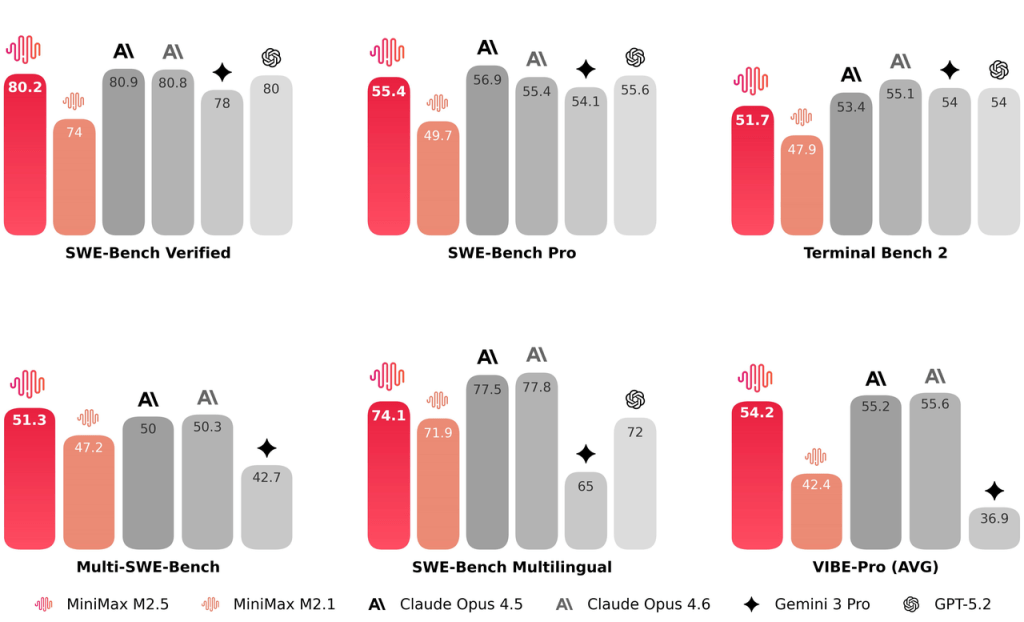
Coding
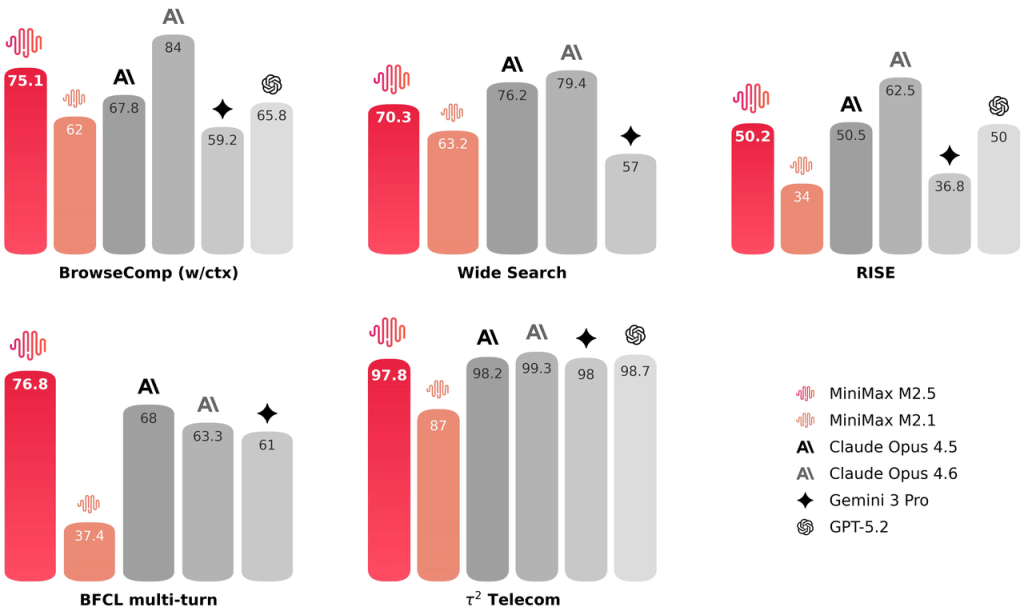
Search and Tool calling
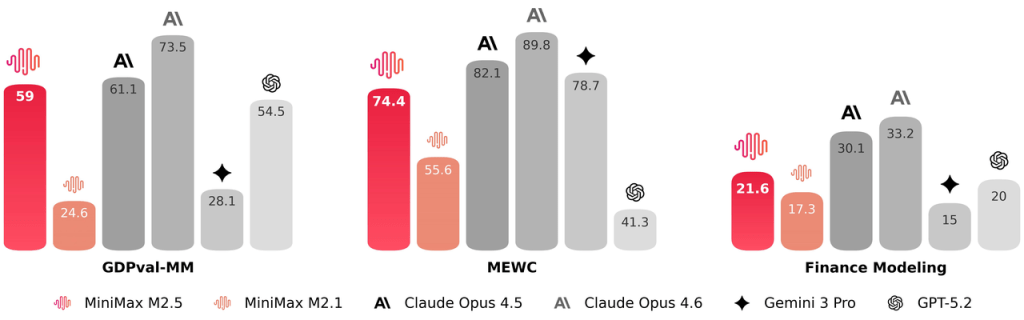
Office work
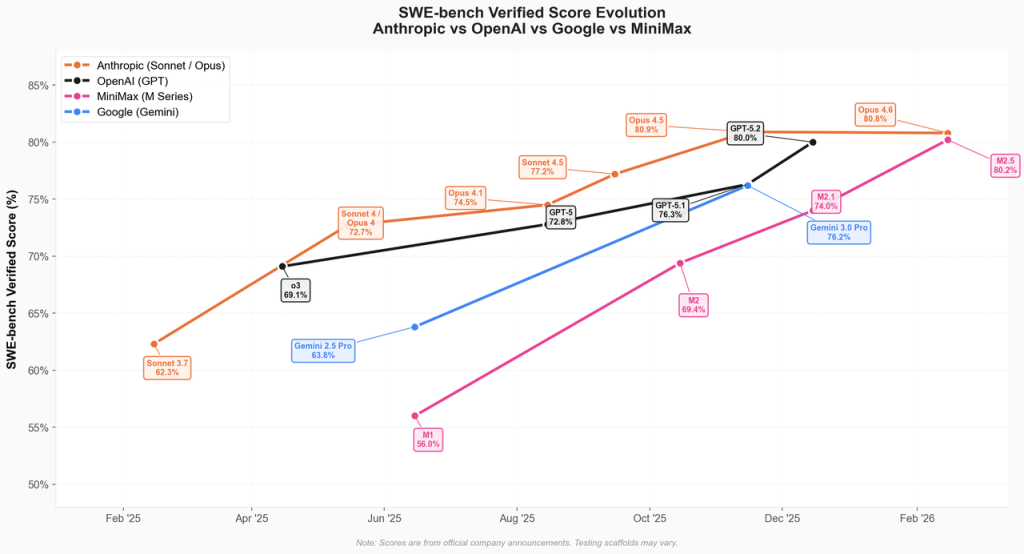
Improvement rate
Applications & Use Cases
Coding assistants that tackle complex software engineering tasks, multi-file edits, and repository-level refactors with SWE-Bench–level performance near Claude Opus.
Agentic workflows where the model orchestrates tools, APIs, and multi-step plans, leveraging strong tool-calling scores and MoE efficiency.
Long-context RAG and analysis over large codebases, documents, and logs using the ~200k-token window for global reasoning.
Local, privacy-sensitive copilots for enterprises or individual developers who want frontier-tier intelligence without sending data to external clouds.
Cost-sensitive production systems that exploit the 10B active-parameter MoE design and GGUF quantization to reduce GPU requirements while keeping high quality.
Research, benchmarking, and distillation setups that treat M2.5 as an open frontier teacher for training smaller specialized models, especially in coding and agents.